|
Media & Speaking
In the Media:
Should busy, stressed-out kids have to do chores?
LISA A. FLAM
|
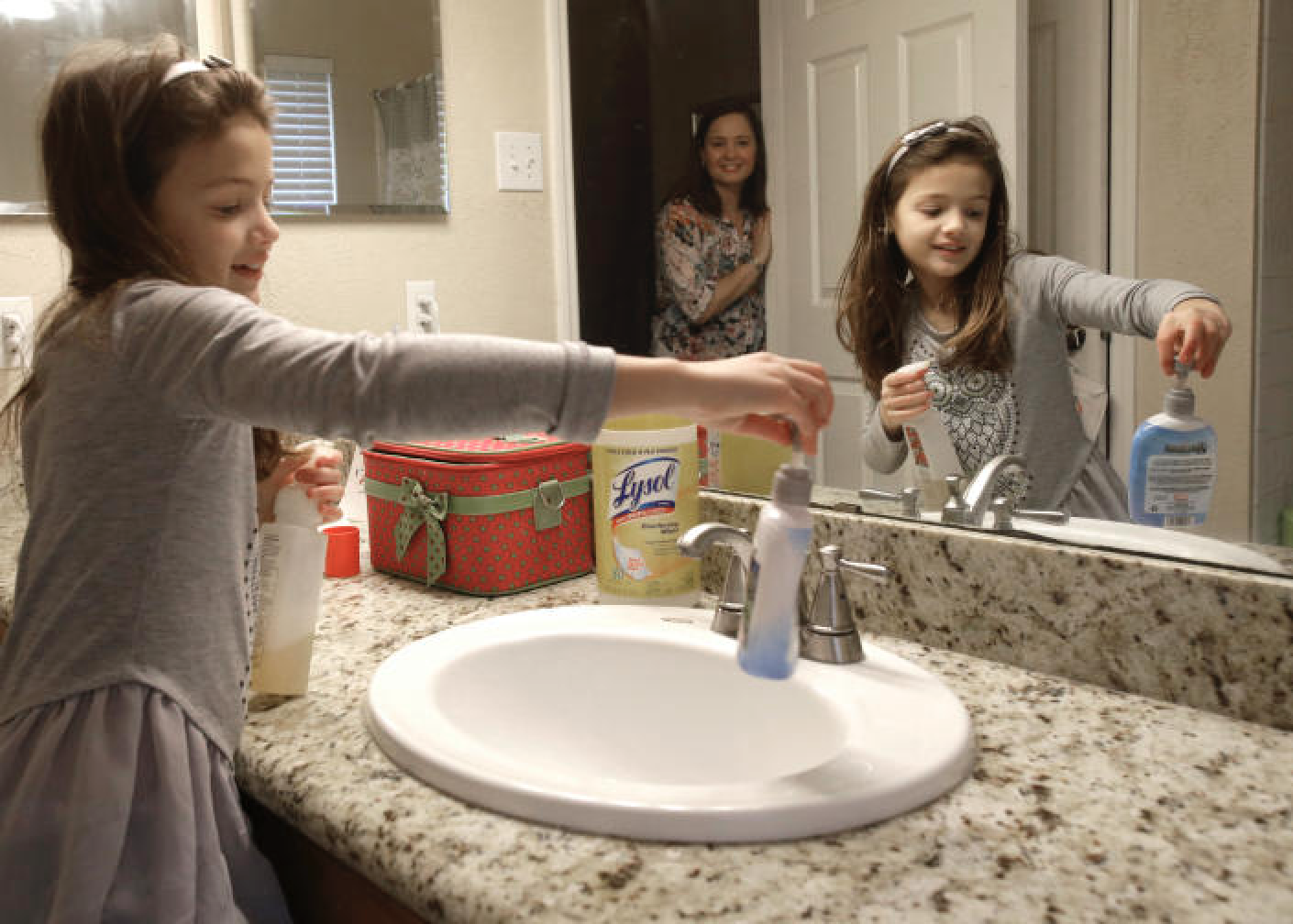
Lily Cherry cleans her bathroom as her mother, Andrea, supervises at their home in Kingwood, Texas. Cherry has passed on her childhood practice of doing chores to her own children believing it gives them a sense of family responsibility. (AP Photo/Pat Sullivan) |
It’s the dirty work of home life: dusting the shelves, mopping the floors and doing the laundry, load after load. Yet asking kids to help has gotten harder for some parents, caught up in the blur of today’s competitive, time-pressed, child-focused world.
“Parents feel very conflicted about getting their kids involved in housework,” says child psychologist Eileen Kennedy-Moore, who sees a wide range of what kids are asked to do and how strongly the completion of chores is enforced.
Parents feel resentful if their kids don’t help, she says, yet many worry about adding housework to their children’s burden, already so heavy with school, sports and other activities that many don’t get enough sleep. (continued)
Speaking Events:
Andrea D. Cherry, M.Ed., BCBA and Brittany Smith, M.Ed., BCBA are available for Media & Speaking Events.
Upcoming Speaking and Conference Presentations:
(More to come)
Previous Speaking and Conference Presentations Include:
Region 3 in Victoria – May 22, 2014
Region 5 in Beaumont – April 12, 2014
22nd Annual Texas Autism Conference – October 2013
- Target Generalization: Integrating ABA and TEACCH in the Classroom Setting.
Lubbock Autism Conference – June 4, 2012
- Target Generalization: Integrating ABA and TEACCH into the Elementary Classroom
- Structured Reading Activities for Students with Autism Spectrum Disorders
20th Annual Texas Autism Conference – October 2011
- Target Generalization: Integrating ABA and TEACCH into the Secondary Classroom
- Emotional Regulation in Students with Asperger’s Syndrome: How to use social thinking, cognitive behavior restructuring and sensory input.
- Structured Reading Activities for Students with Autism Spectrum Disorders
- Functional Academic and Vocations Jigs for Secondary Students.
Together for Autism Conference – December 2010
- Target Generalization: Integrating ABA and TEACCH into the Elementary Classroom
- Target Generalization: Integrating ABA and TEACCH into the Secondary Classroom
- Functional Academic and Vocational Jigs for Secondary Students that Promote Post-Secondary Goals
19th Annual Texas Autism Conference – October 2010
- Target Generalization: Integrating ABA and TEACCH into the Elementary Classroom
- Pre-Vocational and Vocational Jigs for Secondary Students with Autism
Presented at Region 14 – September 2010
- Target Generalization: Integrating ABA and TEACCH into the Elementary Classroom with Elementary Make and Take
- Target Generalization: Integrating ABA and TEACCH into the Secondary Classroom with Secondary Make and Take
Presented at Region 4 – June 2010
- Target Generalization: Integrating ABA and TEACCH into the Elementary Classroom for Students with Autism and Intellectual Developmental Disabilities.
- Elementary Make and Take Session: Using Visual Task Analyses to Teach Toy Play and Cooperative Play Schemes
- Target Generalization: Integrating ABA and TEACCH into the Secondary Classroom for Students with Autism and Intellectual Developmental Disabilities
- Secondary Make and Take Session: Using Functional Academic and Vocational Jigs to Teach Vocational Skills and Cooperative Work Skills.
18th Annual Texas Autism Conference – Dec. 2009
- Target Generalization: Integrating ABA and TEACCH in the Elementary Classroom for Students with Autism.
- Functional Academic and Vocational Jigs for Secondary Students with Autism and Related Developmental Disabilities
17th Annual Texas Autism Conference – Dec. 2008
- Target Generalization: Integrating ABA and TEACCH into the Pre-School Program for Students with Autism
Poster Presentation American Educational Research Assoc. (AERA) Chicago, IL – April 2003
- Research on Theory of Mind (ToM) Development in Relation to Emotion Recognition Skills and Social Reciprocity in Children with High-Functioning Autism and Asperger’s Syndrome.
|